
Temple Vault Runner
Reviews
Temple Vault Runner delivers a satisfying parkour experience with responsive controls and well-crafted levels. The 3D environments are visually appealing, with clear visual cues that help players navigate traps. The gradual difficulty curve ensures newcomers can learn the basics while veterans find plenty of challenge. The dual collectible system adds strategic depth, balancing speed with thorough exploration. It is an excellent choice for quick gaming sessions that demand focus and skill.
About this game
Core Movement Mechanics
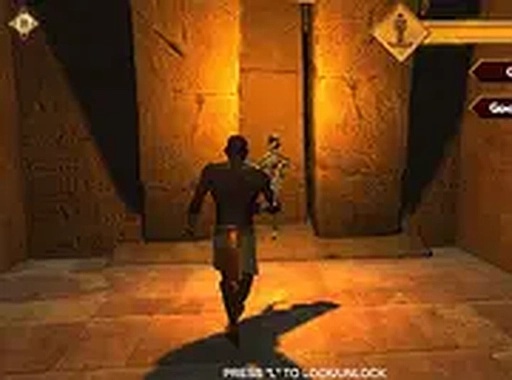
In Temple Vault Runner, players control a character navigating a series of ancient temple environments. The primary actions are running, jumping, and vaulting over barriers. Controls are responsive, typically using keyboard inputs for movement and a dedicated key for jumps. The game emphasizes precise timing, as each obstacle requires a well-timed leap or vault to pass safely. The movement system is designed to feel fluid, allowing for quick direction changes and tight maneuvers. This core loop of running and jumping forms the foundation of every level, demanding consistent focus from the player.
Environment and Obstacle Design
The temple corridors are rendered in 3D with atmospheric lighting and detailed textures that evoke a sense of age and mystery. Each level introduces new pathways and trap placements, ensuring that no two runs feel identical. Hazards are varied, requiring players to learn patterns and adapt their timing. The layout often includes multiple routes, encouraging exploration to find the safest or fastest path. The visual design supports gameplay by clearly signaling which surfaces are safe and which are dangerous, helping players make split-second decisions.
Collectibles and Scoring System
Scattered throughout each level are two types of collectibles: shimmering gems and coins. Gems are essential for progression, as collecting enough of them unlocks the key needed to exit the level. Coins contribute to the player's final score, rewarding thorough exploration. The scoring system also considers speed, offering bonus points for completing levels quickly. This dual focus on collection and speed gives players a clear goal while allowing for different play styles. Some may prioritize gem collection to ensure an exit, while others may race through to maximize time bonuses.
Progression and Difficulty Curve
Temple Vault Runner is structured with a gradual increase in difficulty. Early levels introduce basic obstacles and simple layouts, allowing players to master the controls. As players advance, the complexity of trap patterns and the speed required to navigate them increases. Later levels may combine multiple hazard types and require more precise timing. This progression keeps the game engaging for both newcomers and experienced players. The game is designed for short play sessions, making it easy to pick up and attempt a few runs without a large time commitment.
Strategic Approaches for Success
Success in Temple Vault Runner depends on a combination of practice and observation. Players should study trap patterns before attempting a full-speed run. Learning the layout of each level helps anticipate upcoming obstacles. Collecting gems should be a priority, as they are necessary to progress, but players must balance this with avoiding hazards. Trying different routes can reveal safer or faster paths. Playing in full-screen mode improves visibility, which is especially helpful for spotting distant traps. Patience and consistent movement often yield better results than rushing through unfamiliar sections.







Comments
0 comments