
Passing Grid Soccer Puzzle
Reviews
Passing Grid Soccer Puzzle succeeds where many hybrid games fail: it genuinely combines two genres into a cohesive experience. The spatial reasoning required to find clear passing lanes feels both athletic and analytical. The minimal visual style keeps the focus on the puzzle, and the lack of time pressure makes it a relaxing yet engaging challenge. The only minor drawback is that the core mechanic can feel repetitive after extended play, but the steady introduction of new formations keeps things fresh. A solid choice for fans of both sports and puzzles.
About this game
Core Gameplay Loop
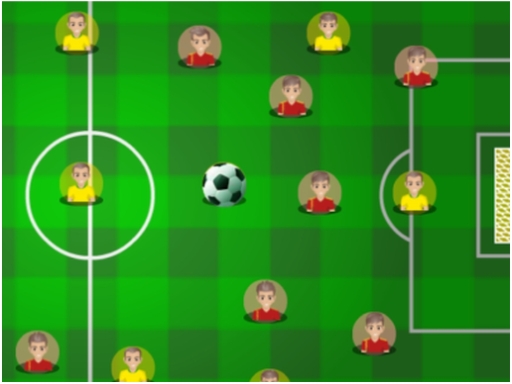
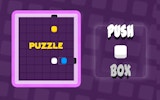
Each stage presents a static arrangement of players on a soccer field. Your controlled character must pass the ball to a teammate in yellow, but only if no defender in red stands directly in the passing lane. If an opponent blocks the line, the pass is intercepted and you must retry. The objective is to move the ball downfield and eventually score a goal. This simple rule set creates a series of spatial reasoning challenges that grow more complex as you advance.
Level Progression & Difficulty
The game introduces new formations and increasing numbers of defenders as you progress. Early levels feature open spaces with few opponents, allowing you to learn the passing mechanics. Later stages require you to chain multiple passes while accounting for shifting defensive positions. The difficulty curve is gradual, ensuring that each new puzzle feels like a natural step up from the last. Players who enjoy pattern recognition and route planning will find the escalation satisfying.
Visual & Audio Presentation
The art style is clean and minimal, with bright colors that clearly distinguish teammates from opponents. Player icons are simple but expressive, and the field is presented from a top-down perspective that makes spatial relationships easy to read. Sound effects are subtle, with a gentle chime for successful passes and a soft buzz for interceptions. The overall presentation is calm and focused, supporting the game's thoughtful pace.
Strategic Depth in Simplicity
Despite its straightforward controls, the game offers meaningful strategic choices. You must decide whether to take a direct but risky pass or a longer, safer route. The scoring system rewards efficiency, encouraging you to find the shortest path to the goal. This creates a satisfying tension between speed and caution. Over time, you develop an intuition for reading the field and anticipating defender movements, turning each new level into a miniature chess match.
Family-Friendly Design
The game is built around non-violent, cooperative themes of teamwork and planning. There is no time pressure, allowing players of all ages to think at their own pace. The content is entirely appropriate for children, with no mature themes or complex language. This makes it a good choice for parents looking for a shared activity that exercises logical thinking without being overly competitive.



Comments
0 comments