
Bone Motion Education Simulator
Reviews
Bone Motion Education Simulator turns anatomy into an interactive puzzle. The ability to adjust joints and see real-time movement changes is both educational and entertaining. The simple controls make it accessible for all ages, while the depth of experimentation keeps it interesting for older learners. A great resource for classrooms or curious individuals.
About this game
Game Introduction
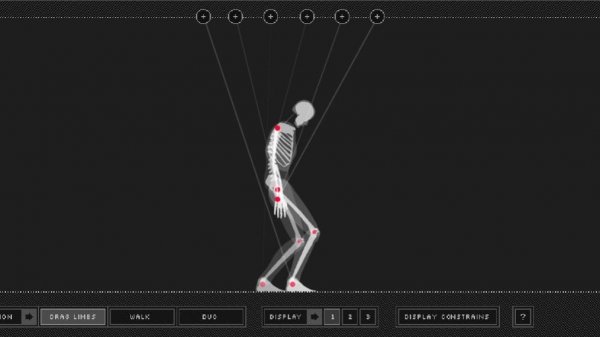
Bone Motion Education Simulator is an interactive learning tool that combines science education with playful experimentation. Players explore how the human body moves by adjusting key articulation points on a digital figure. The core objective is to understand the relationship between joint angles and overall motion. What sets this simulation apart is its hands-on approach to anatomy education. Instead of memorizing diagrams, users directly manipulate joints like the knee or elbow to see real-time changes in posture and gait. This makes complex biomechanics accessible and engaging for learners of all ages. The experience is designed to spark curiosity about how our bodies work, turning abstract concepts into visible, interactive experiments. It is a safe, family-friendly environment where discovery is encouraged through trial and error.
How to Play
Players interact with the digital figure by selecting different joint points on the screen. Each joint can be adjusted to change the angle of the limb or spine. By making small modifications, users can observe how the figure's stance or walking style shifts. The controls are straightforward, allowing for easy experimentation. Users may also add a second figure to the scene to compare movements or see how two figures interact. The interface is designed to be intuitive, so players can focus on learning rather than complex commands. This type of simulation typically responds to mouse clicks or touch inputs, making it suitable for various devices.
Game Features
This simulation includes interactive joint control, allowing users to manipulate multiple articulation points on the figure. It provides educational value by teaching basic anatomy and movement mechanics in a fun way. The ability to add multiple figures creates opportunities for comparative observation and playful interaction. The simple, intuitive controls make the experience accessible to a wide audience. The focus is on learning through direct experimentation, offering a creative method to understand human motion. These features are designed to support self-directed exploration and discovery.
Tips for Success
Start by making small adjustments to one joint at a time to see its specific effect on movement. Gradually combine changes to create more complex walking patterns. Experiment with different joint angles to discover the full range of motion. Adding a second figure can provide additional insights into interaction and balance. Practice regularly to understand how each articulation point contributes to overall movement. The key is to explore freely and enjoy the learning process.







Comments
0 comments